+86 15110153227

11kV and 33kV Power Line Fittings in Africa
Market Overview and Technical Considerations for Distribution Projects
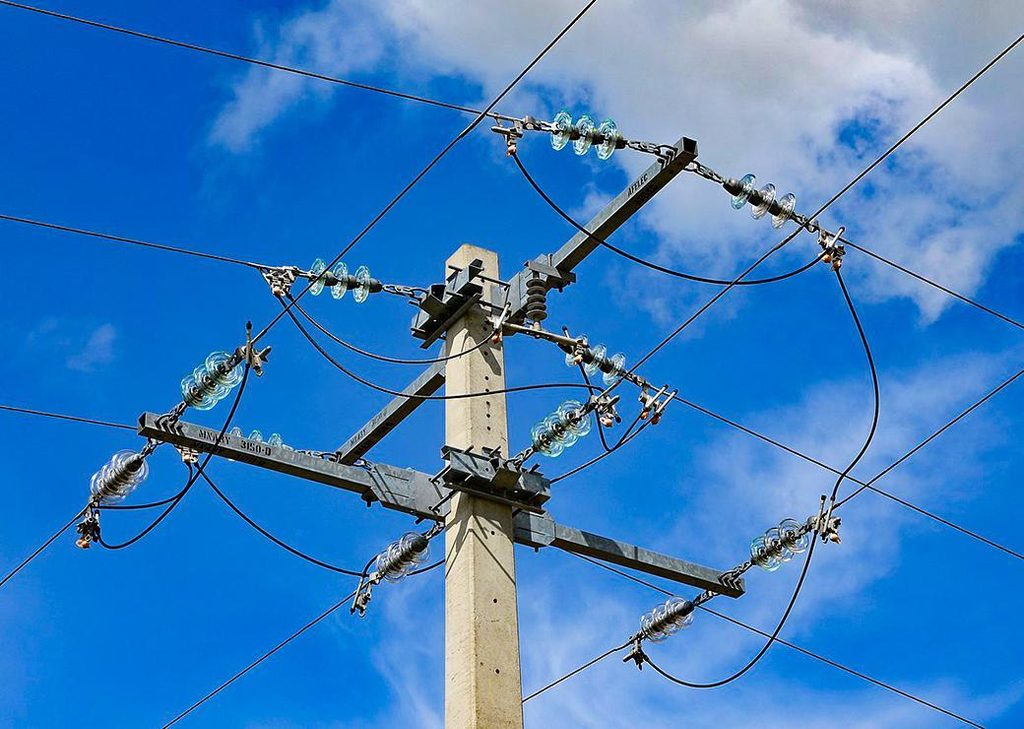
What matters when sourcing fittings for an 11kV or 33kV project?
When an 11kV or 33kV distribution line is being built or upgraded, the main focus is usually on the route, poles, conductors and installation work. But the line cannot be completed without the right fittings to connect and support these components.
For contractors and procurement teams, choosing power line hardware is not simply a matter of finding products marked “11kV” or “33kV”. The actual requirements depend on the utility’s technical specification, conductor size, pole-top arrangement, mechanical loads and local installation conditions.
This is particularly important in African distribution projects. A fitting accepted for one utility or project may not automatically be accepted for another. Buyers should therefore check the project drawings and technical schedules before confirming a purchase.
This article looks at the main fittings used in 11kV and 33kV overhead distribution lines and the practical points to check when sourcing them for projects in African markets.
11kV and 33kV distribution networks: similar products, different project requirements
Both 11kV and 33kV networks are widely used for medium-voltage power distribution. They serve different parts of a distribution system, depending on the network design, distance, load demand and local utility practice.
In many projects, 11kV lines are used to distribute power to local areas and consumers, while 33kV lines are used for longer distribution routes or to supply substations and other distribution points. The exact arrangement varies by country and utility.
For hardware suppliers, the important point is that voltage level alone does not determine the complete product specification.
For example, two 33kV projects may use different conductor sizes, pole structures, insulator arrangements and line fittings. A strain clamp or suspension clamp must match the conductor and the mechanical requirements of the particular line. A crossarm must also match the pole-top design and the specified mounting arrangement.
Before requesting quotations, buyers should try to obtain:
- The project voltage and line configuration.
- Conductor type and size.
- Pole-top assembly drawings.
- Required fitting types and quantities.
- Mechanical or rated strength requirements.
- Applicable utility specifications and referenced standards.
These details help avoid ordering products that look similar but cannot be installed in the actual line design.
Which fittings are commonly used on 11kV and 33kV overhead lines?
The bill of quantities and construction drawings should always determine the final product list. However, several groups of fittings are commonly found in medium-voltage overhead line projects.
Strain clamps and dead-end fittings
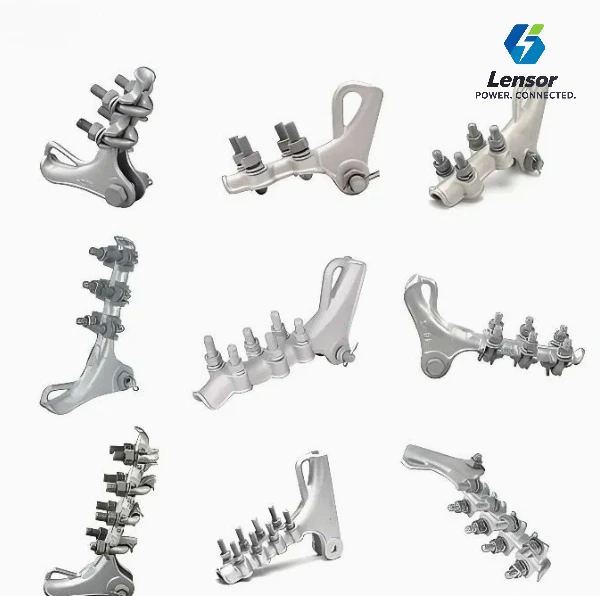
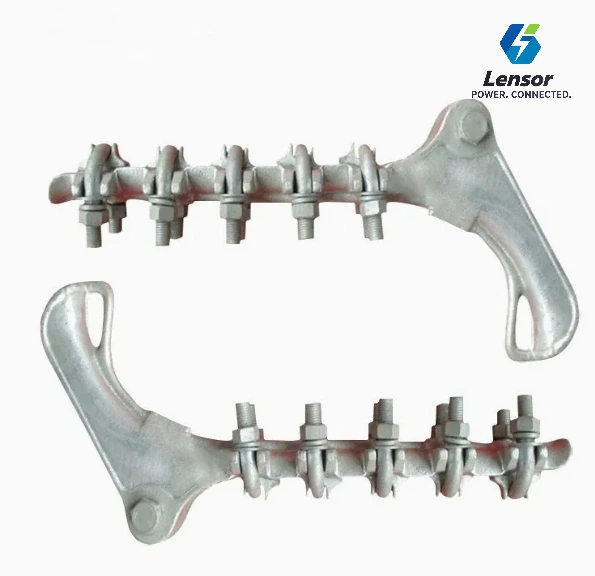
Strain clamps are used where the conductor needs to be securely anchored, such as at dead-end poles, section points and certain angle structures.
The clamp must match the conductor material, construction and diameter. Its mechanical strength must also meet the project requirement.
For procurement, check the conductor range, rated breaking or failure load, material, surface treatment and the method of installation. Do not select a clamp based on the voltage rating alone.
Depending on the line design, projects may specify bolted strain clamps or other dead-end arrangements. The exact type should follow the utility’s drawings and material schedule.
Suspension clamps
Suspension clamps support conductors at intermediate poles and allow the conductor to be held in the required position.
The correct clamp depends on the conductor size and construction, the suspension arrangement and the mechanical loads expected at the support point.
For buyers, it is worth checking whether the project calls for a standard suspension clamp, a particular clamp body design or a complete suspension assembly with associated fittings.
A product described simply as a “suspension clamp” is not enough information for a reliable quotation. The conductor details and drawing are needed.
NLL Strain Clamps
NLD Strain Clamps
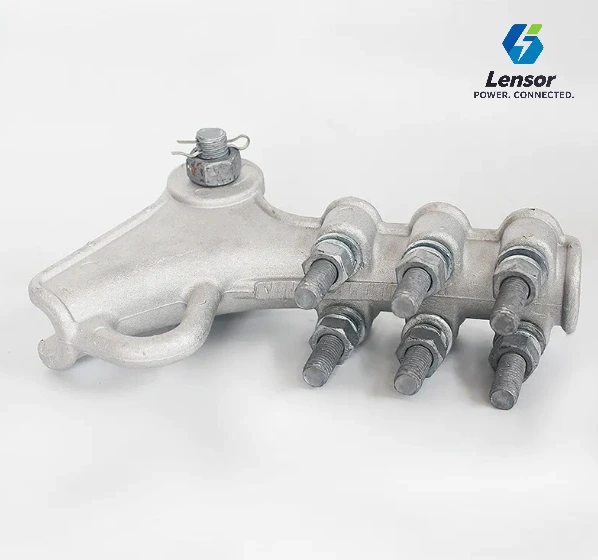
NLD Strain Clamps
Crossarms and pole-line hardware
Crossarms support insulators and help maintain the required conductor arrangement on the pole.
Depending on the utility design, they may be made from steel or another specified material. Steel crossarms and associated brackets should be checked against the required dimensions, hole positions, steel grade, coating and mounting arrangement.
Other pole-line fittings may include U-bolts, shackles, clevises, extension links, eye fittings and yoke plates.
These components are sometimes treated as small accessories, but incorrect dimensions or hole spacing can delay installation. For this reason, drawings and dimensional checks are important before production.
Insulators and insulator fittings
Insulators provide electrical insulation and mechanical support between energized conductors and grounded structures.
For 11kV and 33kV distribution lines, the utility may specify porcelain, glass or composite insulators, depending on the line design and its own approved material requirements.
When checking an insulator, buyers should look beyond the nominal voltage. Relevant information may include:
- Specified voltage class and insulation level.
- Mechanical load or strength rating.
- Creepage distance and other electrical characteristics.
- End fittings and connection dimensions.
- Applicable standard and type-test requirements.
Composite insulators and porcelain insulators are not automatically interchangeable. Any proposed alternative should be reviewed against the utility’s technical specification and approved drawings.
What do African utilities look for in project specifications?
There is no single technical specification covering every African 11kV and 33kV distribution project. National regulations, utility construction manuals, approved drawings and individual tender documents may all form part of the requirements.
A few country examples show why checking the actual project documents matters.
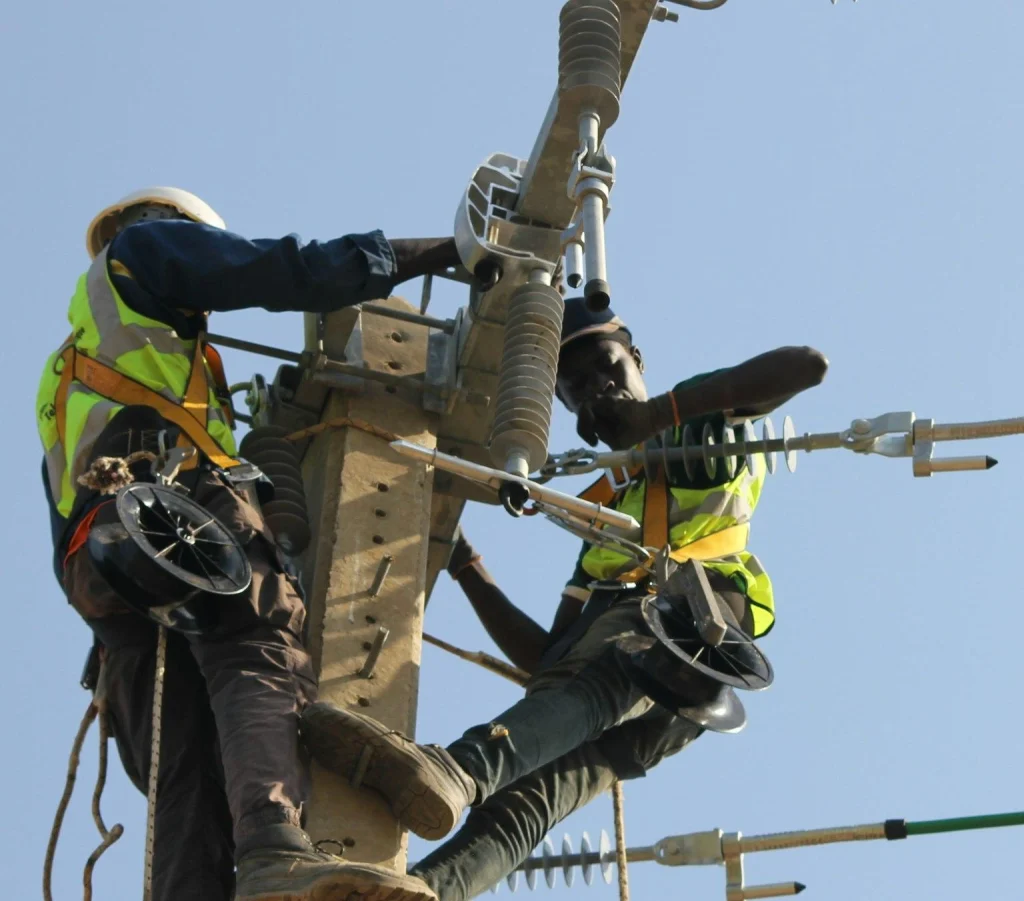
Kenya: check the Kenya Power project specification and drawings
Kenya Power has published project technical documents covering 66kV, 33kV and 11kV overhead lines. These documents address the scope of line construction and the associated equipment, including conductors, insulators, poles, crossarms and fittings.
Some project specifications also give detailed requirements for steel crossarms and other line hardware.
For suppliers and contractors, the practical lesson is to check the particular tender’s technical schedules and drawings rather than relying on a general product catalogue. Dimensions, materials and construction arrangements need to match the project documents.
Reference: Kenya Power project documents
Uganda: consider the distribution construction guidelines
Uganda’s Electricity Regulatory Authority has published Distribution Line Construction Guidelines and standards relating to electricity network facilities.
These documents provide a regulatory and construction reference for distribution network development. A project may also have additional requirements from the distribution licensee, client or funding institution.
When preparing a quotation for Uganda, check which guideline, utility specification and project drawing are referenced in the tender. Do not assume that a product accepted on another country’s network will automatically meet the requirements.
Reference: Electricity Regulatory Authority – Guidelines and Standards
Tanzania: confirm the TANESCO network and project requirements
Tanzania uses both 11kV and 33kV distribution networks. Published studies based on TANESCO information describe the distribution system and typical network parameters, including conductor types and sizes.
This information is useful for understanding the network, but it should not replace the current technical specification issued for a particular TANESCO project.
For procurement, confirm the required conductor, pole-top arrangement, fittings and material specifications from the project documents before selecting products.
Five checks to make before ordering power line fittings
In practice, many sourcing problems can be avoided by checking a few details before production begins.
1. Confirm the conductor size and type
This is especially important for strain clamps, suspension clamps and connectors.
A clamp designed for one conductor diameter may not fit another. Buyers should provide the conductor type, nominal cross-sectional area and, where possible, the manufacturer’s drawing or relevant dimensions.
2. Check mechanical strength requirements
Different positions on an overhead line are subject to different mechanical loads.
Dead-end structures, suspension points and angle poles do not necessarily use the same fittings. Check the required rated strength or failure load in the project specification and make sure the proposed product is suitable for its intended position.
3. Confirm the galvanizing and corrosion-protection requirements
Hot-dip galvanized steel fittings are commonly used in overhead line construction.
However, buyers should not assume that every project uses the same coating requirement. Check the specified galvanizing standard, coating thickness or mass, inspection method and any additional requirements for the operating environment.
This is particularly relevant for projects in coastal areas or locations with demanding environmental conditions.
4. Match the drawings and connection dimensions
For crossarms, brackets, U-bolts, clevises and other pole-line hardware, dimensions matter.
Check hole diameter, hole spacing, steel thickness, overall length, thread size and connection type. If the utility provides approved drawings, use them as the basis for manufacturing and inspection.
5. Prepare the required technical documents
For utility and EPC procurement, product quality is only one part of the evaluation. The buyer may also need technical data sheets, dimensional drawings, material information, test reports, inspection records and certificates.
The exact document list depends on the tender. If type-test reports or specific certificates are required, confirm the requirements early. Do not wait until after production to discover that a document is missing.
What should buyers include in an RFQ?
A clear request for quotation makes it easier for a supplier to identify the correct products and provide a useful offer.
For an 11kV or 33kV overhead line project, the RFQ should ideally include:
- Country, utility and project name.
- System voltage and line configuration.
- Conductor type and size.
- Product description and required quantity.
- Technical specification or standard reference.
- Drawings, dimensions or approved material schedules.
- Required mechanical ratings and surface treatment.
- Inspection, testing and documentation requirements.
- Delivery destination and required delivery schedule.
If some information is not yet available, send the documents you have and identify the outstanding items. It is better to clarify the specification before quotation than to make assumptions about the product.
Selecting a power line fittings supplier
For distribution projects, a supplier should be able to do more than provide a price list.
The supplier needs to understand the function of each fitting, read technical drawings, check dimensions and identify missing information before confirming an order.
For buyers, several points are worth reviewing:
- Does the supplier offer the required range of overhead line hardware and accessories?
- Can it provide product drawings and technical data?
- Can the proposed products be checked against the project’s specification?
- Are material and galvanizing requirements clearly stated?
- Can the required inspection and test documents be provided?
- Can the supplier support communication when technical details need clarification?
These checks are particularly useful when sourcing several product categories for one project. A coordinated quotation can help the buyer review the complete material list and identify specification gaps before placing an order.
Power line hardware for African distribution projects
11kV and 33kV projects may use many of the same product categories, but the final selection must follow the conductor details, line design and utility requirements.
Strain clamps, suspension clamps, crossarms, insulators, connectors and pole-line accessories all need to be matched to their intended application. The country name or voltage level alone is not enough to confirm suitability.
LensorTech supplies overhead power line hardware, electrical insulators and cable accessories for international distribution projects. Our product range includes galvanized steel line fittings, clamps and connectors, insulator fittings and related accessories.
For project enquiries, buyers can share the bill of quantities, technical specification or drawings. This gives us a clearer basis for checking product details and preparing a quotation.
The most useful starting point is always the project specification—not just the product name.
Frequently Asked Questions
Are 11kV and 33kV power line fittings interchangeable?
Not necessarily. Some product categories may look similar, but the required dimensions, insulation level, mechanical strength and approved construction arrangement can differ. Always check the utility specification and project drawings.
Can the same power line fittings be used in different African countries?
Not automatically. Utilities may have different material schedules, construction standards and approval requirements. A product should be checked against the requirements of the specific country, utility and project.
What information is needed to quote strain clamps?
The most useful information includes conductor type, conductor size, required mechanical strength, clamp type and relevant drawings or technical specifications.
What documents may be required for utility projects?
Depending on the tender, buyers may need technical data sheets, drawings, material information, test reports, inspection records and certificates. The tender document should be used to confirm the exact requirements.
Should buyers choose fittings based only on voltage rating?
No. Voltage is only one part of the selection. Conductor size, mechanical loading, installation position, material, dimensions and utility approval requirements also need to be checked.
Planning an Overhead Line Project?
We supply power line hardware, electrical insulators, and cable accessories for overhead transmission and distribution projects.